Chrome: Jetzt erhalten alle JPEG XL
JPEG XL ist in Chrome 155 angekommen. Ein Rust-Decoder soll das Bildformat sicher und schnell verarbeiten.
Tags 3 followers
Follow #rust from Mastodon or any other Fediverse app and its public posts arrive in your timeline. No vutuv account needed.
@rust@tags.vutuv.de
Thomas POTIER Ingénieur d’assistance technique
Samuel Rüegger Digital Senior Expert @ Compresso AG
Mihail Moroşan Deployed AI Engineer @ Helsing
Moritz Ulrich Senior Software Developer
Joachim Astel Vorstand @ noris network AG
15 posts
Chrome: Jetzt erhalten alle JPEG XL
JPEG XL ist in Chrome 155 angekommen. Ein Rust-Decoder soll das Bildformat sicher und schnell verarbeiten.

Is your company currently hiring for a role that includes using Rust?
Reply with a link to the opening and any relevant context.
If you’re not, we’d appreciate a repost for visibility

🤩 Barnfind jackpot! These colourful vintage 1920s/1930s Citroens sat rusting in an old warehouse, surrounded by moss and ferns. Which one would you save?

Industrial ruins, a delightful mixture of shapes and shadows. Some look like faces; some look like animals. What shapes and forms does your unique imagination see in these scenes?


Ein Artikel von mir über das Erdbeben, das von DHH auf der Rails World 2026 initiiert wurde. Programmiersprachen und Frameworks sind nicht mehr so wichtig wie früher. Gerade deutsche Firmen und Teams tun sich damit sehr schwer.
“Dann kam die Implosion. Nonchalant erklärte er, dass er das Backend der neuen Hey-Version mit Agentic Coding in Rust implementiert hat. Boom!”
2 likes 2 reposts
@wingfire@social.cologne shared this @kruemmelspalter@chaos.social liked this @oliverandrich@social.tchncs.de shared this @oliverandrich@social.tchncs.de liked this
Already counted in the numbers above.

Rust statt Ruby – Rails-Gründer Hanssons neues Projekt
Ruby-on-Rails-Erfinder David Heinemeier Hansson (DHH) verzichtet in seinem neuesten Projekt auf Rails und löst damit Unruhe in der Community aus.
Today’s Rails World 2026 talk by DHH was special. I think it just became an instant classic. youtube.com/watch?v=V9SxpJpHuus
Highlights:
WebApps are dead since it is so cheap, easy, and fast to build native apps with agentic coding.
No need for a framework like Ruby on Rails if you can achieve the same functionality with e.g. Rust on the backend while saving a lot of money by reducing the number of needed servers and having a faster application.
Your application needs a CLI. Because agents love command-line tools.
So the inventor of a very popular framework uses the keynote of THE main conference for that framework to tell the audience, which consists only of developers who use that framework every day, that his own company stopped using the exact framework for the next version of one of their key products. BOOM!
1 like 1 repost
@s4msung@chaos.social shared this @s4msung@chaos.social liked this
Already counted in the numbers above.
Ubuntu schließt Rust-Umstieg ab
Ubuntu 26.10 migriert alle Standard-Coreutils auf Rust. Auch cp, mv und rm sind nun enthalten.

Who would’ve thought that #Rust becomes native for GPU kernels:
developer.nvidia.com/blog/…
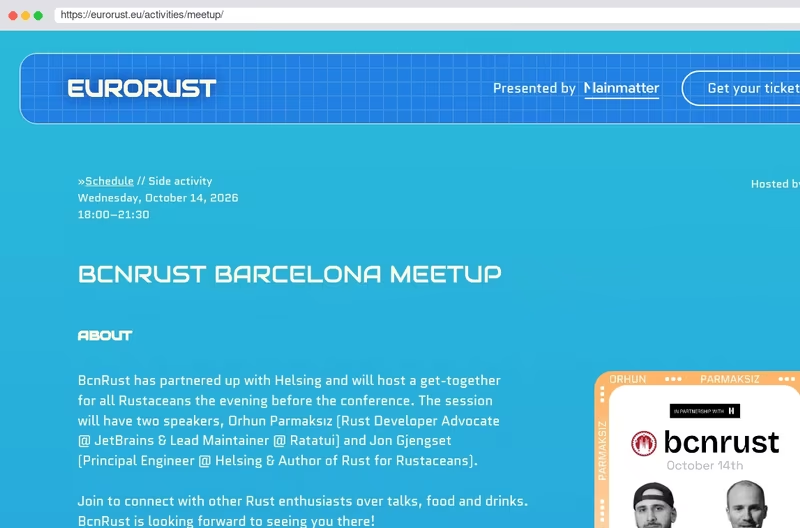
Helsing’s own Jon Gjengset (also known as the author of Rust for Rustaceans) will be speaking at bcnrust in October! eurorust.eu/activities/…
RIP Thomas the Tank Engine. A rusting abandoned steam train, left in a decaying depot. I wonder what the original paint colour was; now not a trace remains.


Du möchtest herausfinden, ob #Rust die passende #Programmiersprache für dein Projekt ist? Diese und weitere Fragen rund um das Rust-Ökosystem beantwortet Dozent Daniél Kerkmann in seiner Schulung an der Heinlein Akademie.
Alle Devs, die sehr viel Wert auf Sicherheit legen und hochperformante Anwendungen schreiben wollen, die gut skalieren, ohne mit Rechenleistung Ressourcen zu verschwenden, sollten jedenfalls einen Blick auf Rust werfen.

As a Rustacean, looking forward to the full Rust rewrite of Vutuv in the far far future.
Everything will one day be Rust.
Your first born child will be Rusty.
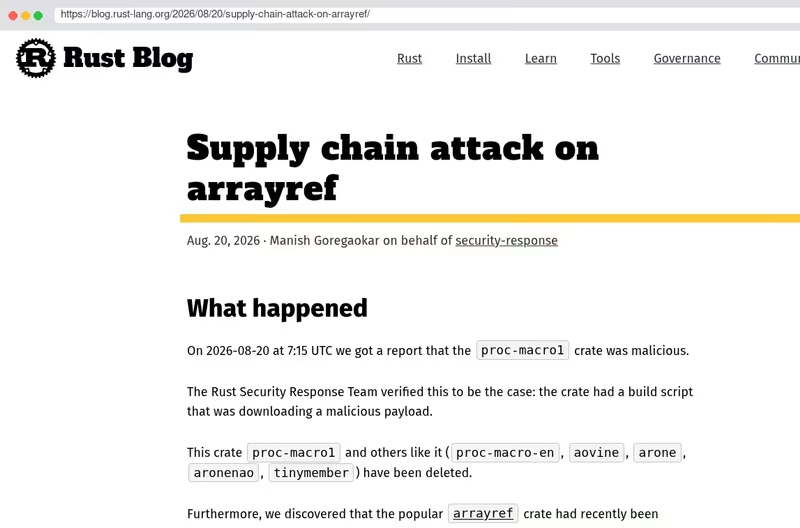
There’s a Rust supply chain attack going around right now, the arrayref crate got compromised (along with internment and append-only-vec) after apparently getting republished from a hijacked account, pulling in a malicious proc-macro1 dependency that runs a shady build script.
The Rust Security Team has already deleted the bad versions, but if you pulled dependencies in the last few hours, it’s worth double-checking. Malicious versions to watch for:
arrayref@0.3.10
internment@0.8.7
append-only-vec@0.1.9
proc-macro1, proc-macro-en, aovine, arone, aronenao, tinymember (any version)
Supply chain attack on arrayref | Rust B…
Quick way to check if you’ve cached any of these locally:
find ~/.cargo/registry/cache -type f \( \
  -name 'append-only-vec-0.1.9.crate' -o \
  -name 'arrayref-0.3.10.crate' -o \
  -name 'internment-0.8.7.crate' -o \
  -name 'proc-macro1-*.crate' -o \
  -name 'proc-macro-en-*.crate' -o \
  -name 'aovine-*.crate' -o \
  -name 'arone-*.crate' -o \
  -name 'aronenao-*.crate' -o \
  -name 'tinymember-*.crate' \) -print
Full writeup from the Rust team here: blog.rust-lang.org/2026/08/20/supply-chain-attack-on-arrayref
Da ich neue Programmiersprachen am liebsten lerne, in dem ich auch etwas damit entwickle, habe ich direkt mit einem kleinen Projekt begonnen. Wer schon mit vielen Sprachen gearbeitet hat, kann durchaus diesen Weg gehen. Nach einigen Tagen macht die App das was sie soll. Halt nur auf dem Mac. Heißt, wenn der Deckel zu geht, ist Schluß. Jetzt muß das noch auf einen Raspberry Zero. Und dann wird mit fortschreitenden Kenntnissen alles einem Refactoring unterzogen.