


AI
Tags 2 followers
Follow from the Fediverse
Follow #ai from Mastodon or any other Fediverse app and its public posts arrive in your timeline. No vutuv account needed.
@ai@tags.vutuv.de
The most endorsed users with this tag
-
Teofilus Shaduka Marketing Director @ ISACA Windhoek Chapter
-
Stefan Wintermeyer Founder @ Wintermeyer Consulting
Posts with this tag
382 posts
Filters

Mal eine Frage im Bereich AI mit LLM und explizit im Zusammenhang mit a11y.
In wie weit gibt es bei blinden Menschen oder auch mit starker Sehbehinderung (übrigens auch Menschen, die nur über Sprache kommunizieren können) das Interesse (oder vielleicht auch nur die Idee) Applikationen über KI Chats mittels LLM Modelle und dem Protokoll MCP zu steuern, anstatt sich durch wilde UIs zu wühlen?
Mittels MCP (Model context protocol), werden Anwendungen über Text oder Sprache bedienbar, allerdings über den Proxy eines AI Chatbot mit passenden Modell, das MCP nutzen kann. Es kann als Alternative zu ARIA, UIA usw dienen (oder wo sich a11y in den UI-Frameworks nicht etabliert hat).
Gibt es da Meinungen und Erfahrungen zu?
Bitte boosten

“It’s 24 hours a day, 365 days a year and it gets on people’s nerves,” Beaulieu said said. “They can’t sleep at night. They can’t sit on the patio.”

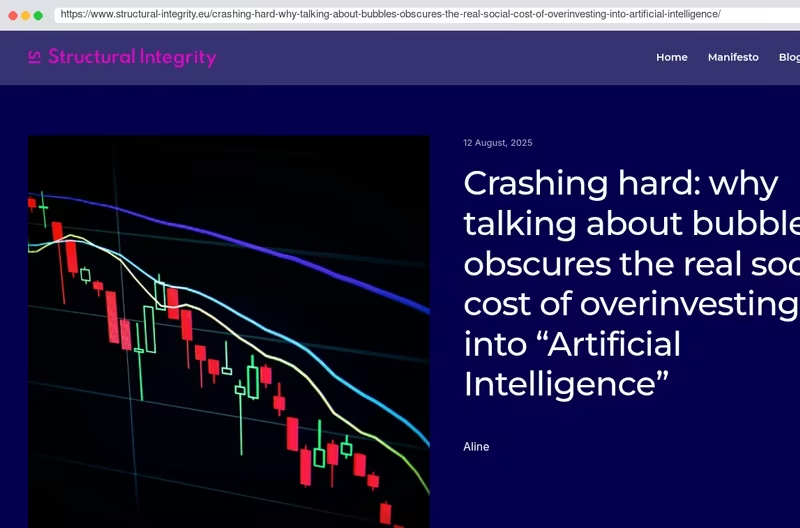
“Es gibt einige Gründe anzunehmen, dass die Effekte einer platzenden KI-Blase langanhaltender und schmerzhafter sein werden, als beim Dot-Com Crash:
Zum Beispiel: Marktkonzentration, Tech-Nähe zu Regierungen und finanzielle Akteure, die in AI-Erfolg investiert sind.”
Quelle: structural-integrity.eu/crashing-hard-w…
1/2
“If anyone needs better literacy on AI, it is not the public, but [Prime Minister] Carney himself …
AI opposition isn’t the product of a lack of ‘literacy’”
— @parismarx@mastodon.online
AI
CdnPoli


Most ballot measures in the U.S. against #AI data centers were successful: wsj.com/tech/… #midterms #artificialintelligence #datacenters


KI kann alles besser. Teilweise. Und in wenigen Jahren zu einem großen Teil. Alles ist irgendwie starken Veränderungen unterlegen und es wird immer deutlicher und mehr. Zwar geraten die großen BigTech-Player wirtschaftlich immer mehr unter Druck, die Kosten sind immens und Geld verdienen schwierig, aber die Technologie bleibt. Sie wird also Teil unseres Lebens bleiben und in Zukunft noch […]

#AI = flawed code, or is that fraud Claude?

From “predict the next word” to “take actions until the job is done” – Vasudev Gupta explains the evolution of LLMs and which mental model helps him make sense of the field.
(via @hackernoon@mas.to)

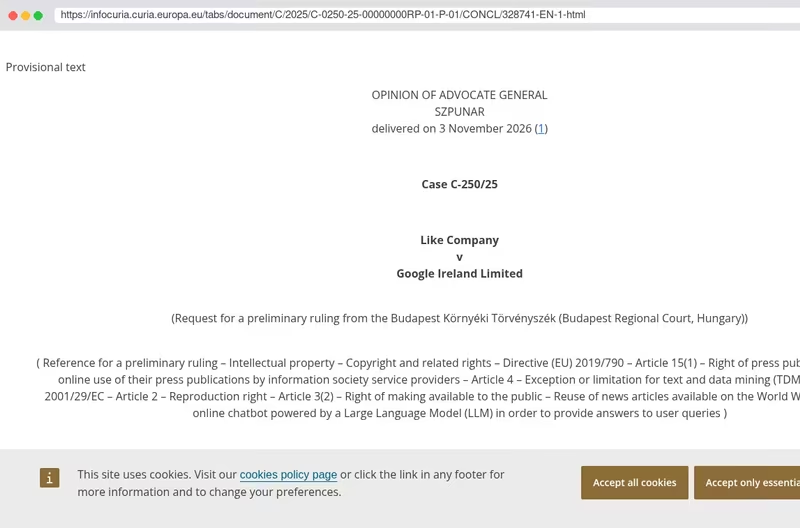
Guten morgen, liebe #Jura-, #KI, #Kreativ-Bubble! Egal, wo ihr im Streit um #AI steht: All Eyes on this!
Das ist der Schlussantrag von EuGH-Generalanwalt Maciej Szpunar zum Verhältnis von KIs und Urheberrecht.
infocuria.curia.europa.eu/tabs/…
Für die, die damit nicht vertraut sind, hier ein Headstart:

My talk submission to #40C3 was accepted.
I’ll speak in the science track about what was and is going on in #math and #ai in 2026.
An entire field and community is going through a very drastic transformation at break-neck speed. What mistakes have we made? What can we learn from software engineering which is a couple of months ahead of us? And what can we maybe teach the next field going through this?
Still a couple of weeks for interesting stuff to happen though…

In South Carolina, the AI industry is making its biggest general-election bet: about $5M behind Republican Darline Graham. $2.5M came from Building the Future, a Leading the Future arm that appeared in October and hasn’t spent on any other federal race. Her opponent calls her “Data Center Darline.”
crypto
cryptocurrency
AI
ArtificialIntelligence
USpol
+5 Less
USpolitics citationNeededNewsletter SouthCarolina Senate SCSen


Crypto has also stopped spending big for Democrats in general elections. In 2024 it put $10M apiece behind Slotkin and Gallego. This cycle, no Democrat has drawn more than about $1M, and those are safe incumbents who voted the industry’s way.

But most of the money is backing winners. Crypto and AI PACs spent in 105 contests that were never in doubt, versus 44 competitive ones. The major networks didn’t back a single underdog. This is part of a strategy to buy/reward loyalty and pad the PACs’ win rate.


Auf welche Frage ist KI die Antwort? Um 15:30 Uhr sprechen der Beauftragte gegen Antisemitismus und für das jüdische Leben Michael Blume @BlumeEvolution@digitalcourage.social, der Autor von „Memokratie“ Wolfgang Ullrich @lfdi@xn–baw-joa.social Tobias Keber über Social Media, KI-Slop Antisemitismus und autoritäre Bildpolitik
#KIWoche #Datenschutz #AI #KI #Recht #DSGVO #KISlop AISlop #Bildpolitik #SocialMedia #HateSpeech #Antisemitismus
13:30 Uhr geht’s weiter: Auf welche Frage ist KI die Antwort?
Mit Silja Vöneky @unifreiburg@xn–baw-joa.social Wie kann und soll man Hochrisiko-KI regulieren? Zu Herausforderungen und Lösungsansätzen
anschl. Gespräch: Wie passen Technik und Recht zusammen? Georg Borges, Silja Vöneky, Thomas Hentschel MdL
Auf welche Frage ist KI die Antwort? Um 10:45 Uhr sind wir im Livestream mit @lfdi@xn–baw-joa.social Tobias Keber und dem IT-Rechtler Georg Borges und seiner Keynote: KI in der Justiz – alles hochriskant und verboten?
🎥 tube.bawü.social/w/…
Einschalten!

🎧 AI News #14 mit Fabian Walther und Ole Wendland.
In dieser Folge:
✅ Anthropic will an die Börse, das Pflichtdokument verrät viel
✅ Eine PHP-Lücke trifft rund 70 Prozent der Webseiten
✅ Patch-Dilemma: LiteLLM liefert Schadcode, der Passwörter abgreift
✅ Kimi K3.1 Pro erreicht als Open-Weights-Modell Fable-Niveau
Überall, wo es Podcasts gibt und hier:


Googles Diagnose-KI: Chat happens - DocCheck
Bisher überzeugte Googles Medizin-KI AMIE vor allem in Simulationen. Nun führte sie erstmals Anamnesegespräche mit Patienten einer Hausarztpraxis. Die Ergebnisse sind vielversprechend – zeigen aber auch klare Grenzen.
doccheck.com/de/… #Digitalisierung #digitalization #DigitalHealth #ArtificialIntelligence #AI