Selfhosting

Tags 1 follower

Follow from the Fediverse

Follow #selfhosting from Mastodon or any other Fediverse app and its public posts arrive in your timeline. No vutuv account needed.

@selfhosting@tags.vutuv.de

Your address is used once, to send you to your own server's follow dialog. It is never stored here.

Posts with this tag

78 posts

Filters
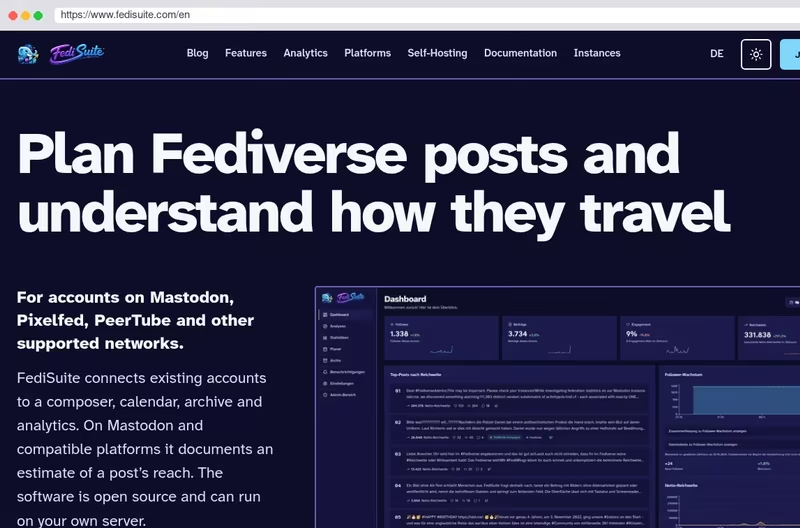
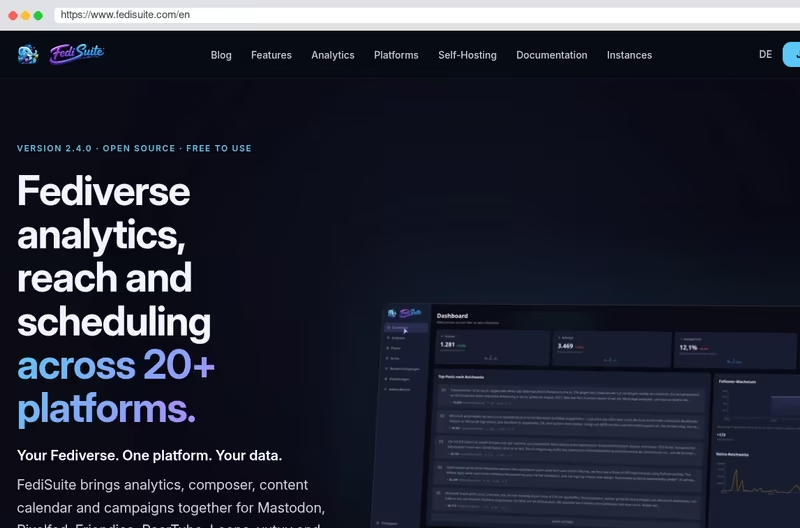
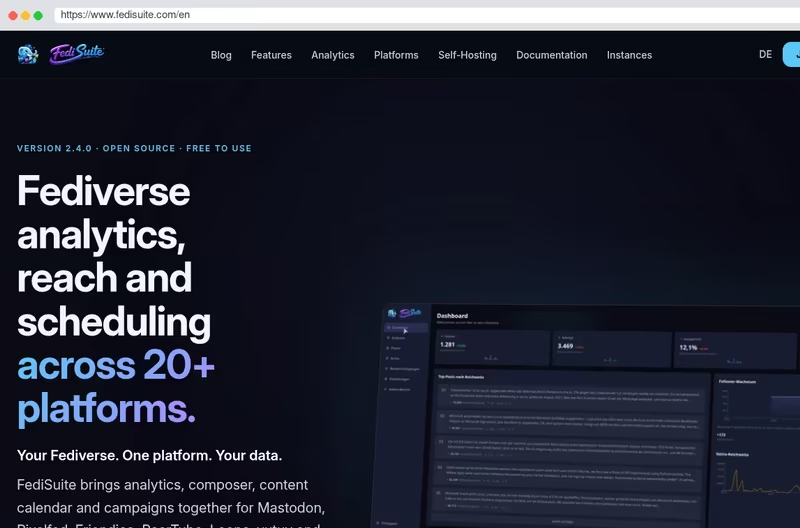
FediSuite @FediSuite lsbt.me

FediSuite v2.4.3 has been released!

FediSuite now features a completely redesigned user interface. The website and application share a consistent visual identity.

The most important changes since v2.4.1:

Completely redesigned user interfaceConsistent design across dark and light modesAtkinson Hyperlegible typography for improved readabilityLarger interactive elements and more readable labelsRedesigned charts, dialogs and calendar navigationConsistent keyboard focus indicatorsImproved browser compatibility on macOS and iOSFixed an issue with automatically saving image alt textThis release focuses on usability, accessibility and a consistent visual experience.

FediSuite remains free, open source and fully self-hostable.

fedisuite.com

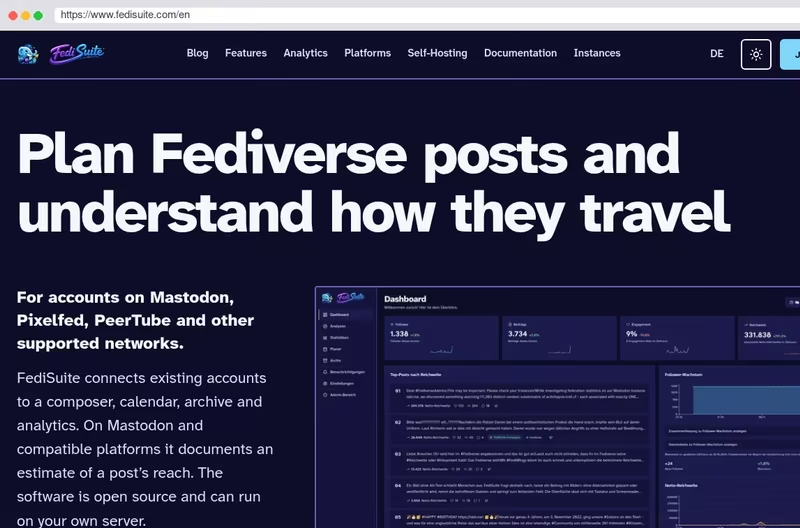
FediSuite @FediSuite lsbt.me

FediSuite v2.4.3 ist veröffentlicht!

FediSuite präsentiert sich in einem vollständig überarbeiteten Design. Die Website und die Anwendung folgen nun einer gemeinsamen visuellen Identität.

Die wichtigsten Änderungen seit v2.4.1:

Vollständig überarbeitete BenutzeroberflächeEinheitliches Design im Dark und Light ModeAtkinson Hyperlegible für eine bessere LesbarkeitGrößere Bedienelemente und besser lesbare BeschriftungenÜberarbeitete Diagramme, Dialoge und KalendernavigationEinheitliche Fokusmarkierungen für die TastaturbedienungVerbesserte Browserkompatibilität unter macOS und iOSFehlerkorrektur beim automatischen Speichern von Alt-TextenDer Fokus liegt dieses Mal auf Benutzerfreundlichkeit, Barrierefreiheit und einem konsistenten Erscheinungsbild.

FediSuite bleibt kostenlos, Open Source und vollständig selbst hostbar.

fedisuite.com

Anomaly @x niwego.com

Android 17 Now Blocks App Access to Your Local Network

If your phone suddenly refuses to open your self-hosted Nextcloud, Jellyfin or router admin page, the network is probably fine. The phone is.

Starting with Android 17, apps built for SDK 37 or higher need a new runtime permission — ACCESS_LOCAL_NETWORK — before they can send a single packet to a local address.

Reports of broken homelab access have been appearing on selfhosted communities this week, from people who spent days chasing DNS and firewall ghosts that were never the problem.

The permission sits in the “Nearby devices” group, the same one Bluetooth uses, so a phone that already granted Bluetooth access may never show a prompt at all.Outgoing TCP connections, incoming connections, UDP unicast and multicast, and mDNS lookups for .local names all require it.Traffic to the internet is unaffected, which is exactly why the failure looks like a dead server instead of a blocked network.The diagnosis is the ugly part. Google’s documentation says a TCP connection blocked by the missing permission typically fails as a timeout rather than a permission error: no dialog, no readable log line, just a page that never loads.

UDP requests usually return EPERM instead, and for browsers Google points developers to android_getnetworkblockedreason(), an NDK call that separates a blocked local packet from a server that is simply down.

Legacy apps get a grace period. Anything still targeting SDK 36 or lower keeps an implicit grant as long as it holds INTERNET, and drops to blocked-by-default only when it rebuilds for API 37.

Expect the breakage to arrive app by app, over the coming months, on the same phone.

The reasoning behind the change is defensible. Google notes that any app holding INTERNET permission could previously reach every device on the house network — useful for building a fingerprint of the user, and a decent proxy for location.

Blocking that by default closes a door any app with a bundled network library could walk through unchallenged.

The cost is that opening your own server now depends on a permission buried in settings.

If a self-hosted app silently stops loading on Android 17, look for it under the app’s permissions, allow nearby devices, and only then start checking the firewall.

📷 Simeon W from Wellington, New Zealand · CC BY 2.0 · Wikimedia Commons

🔗 Source: Android Developers

cover
GNU/Linux.ch @gnulinux social.anoxinon.de

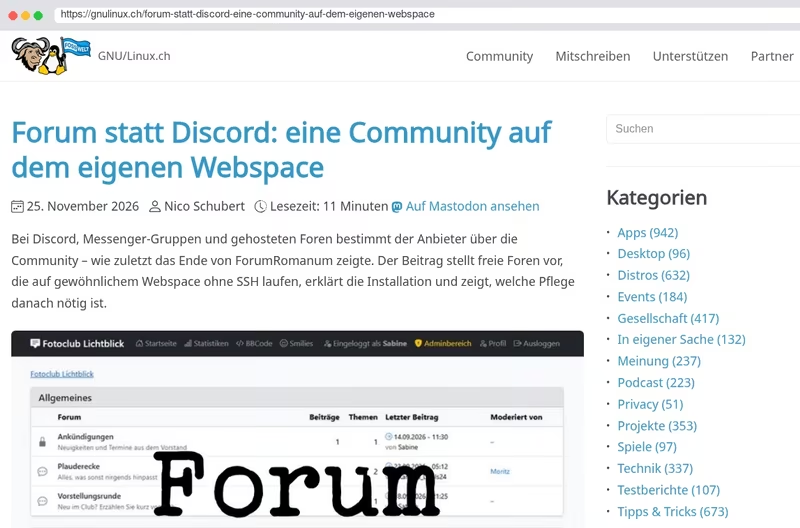
Forum statt Discord: eine Community auf dem eigenen Webspace

Bei Discord, Messenger-Gruppen und gehosteten Foren bestimmt der Anbieter über die Community – wie zuletzt das Ende von ForumRomanum zeigte. Der Beitrag stellt freie Foren vor, die auf gewöhnlichem Webspace ohne SSH laufen, erklärt die Installation und zeigt, welche Pflege danach nötig ist.

#Forum #Selfhosting #Discord #PHP #Community #Linux

gnulinux.ch/forum-statt-discord-eine-co…

FediSuite @FediSuite lsbt.me

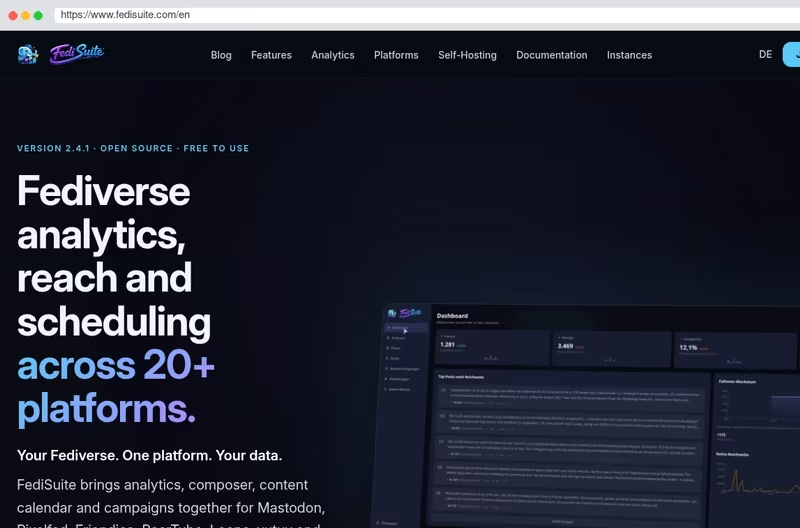
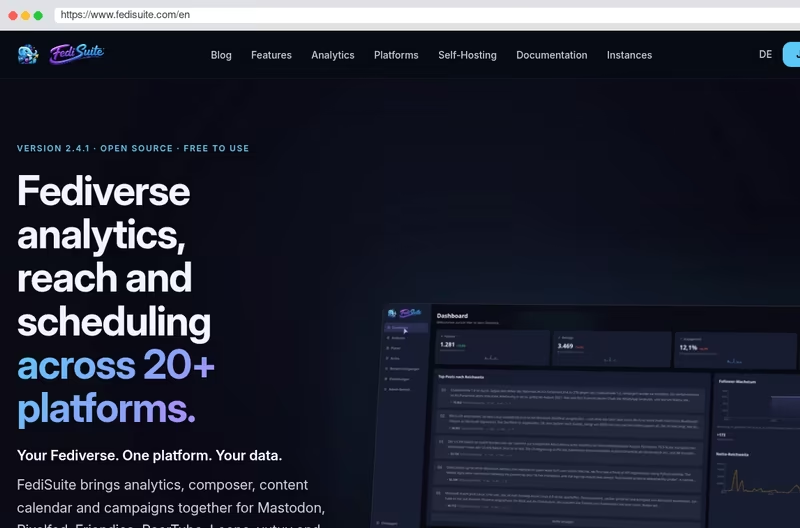
FediSuite v2.4.1 has been released!

Here comes another update with new features and extensive security improvements.
This time, it is more of a security-bugfix-release.

What’s new:

Bulk import: Import posts with images from ZIP/CSV files, either as drafts or scheduled posts.

Campaigns: Posts published outside FediSuite can now be assigned to campaigns and labels retroactively, including their reach and interactions in campaign reports.

Accessibility: Missing image alt text is now visible directly in the calendar and post lists.

Calendar: On larger screens, post details now appear alongside the calendar.

Security improvements:

Numerous enhancements to OpenID Connect, OAuth, two-factor authentication, session management, administrator privileges and access controls.

Media upload diagnostics and team campaign management have also been improved.

FediSuite is free, open source and self-hostable.

fedisuite.com

FediSuite @FediSuite lsbt.me

FediSuite v2.4.1 ist veröffentlicht!

Hier kommt ein weiteres Update mit neuen Funktionen und umfangreichen Sicherheitsverbesserungen.
Diesmal ist es eher ein Security-Bugfix-Release.

Neu in dieser Version:

Massenimport: Beiträge inklusive Bildern per ZIP-/CSV-Datei importieren – wahlweise als Entwürfe oder zeitgesteuerte Veröffentlichungen.Kampagnen: Auch außerhalb von FediSuite veröffentlichte Beiträge lassen sich nachträglich Kampagnen und Labels zuordnen und fließen in die Auswertungen ein.Barrierefreiheit: Fehlende Bildbeschreibungen (Alt-Texte) sind jetzt direkt im Kalender und in den Beitragslisten erkennbar.Kalender: Auf großen Bildschirmen werden Beitragsdetails jetzt neben dem Kalender angezeigt.Sicherheit im Fokus:

Zahlreiche Verbesserungen bei OpenID Connect, OAuth, Zwei-Faktor-Authentifizierung, Sitzungsverwaltung, Administratorrechten und Zugriffskontrollen.

Außerdem wurden die Fehlerdiagnose bei Medienuploads und die Verwaltung von Teamkampagnen verbessert.

FediSuite ist kostenlos, Open Source und selbst hostbar.

fedisuite.com

FediSuite @FediSuite lsbt.me

FediSuite kannst du selbst betreiben. Das Projekt ist Open Source unter GPL-3.0, die Installation läuft über Docker Compose mit PostgreSQL, der App und Hintergrund-Workern. Deine Daten bleiben auf deinem Server, ein Reverse Proxy wie Traefik gehört davor, ein Beispiel liegt bei. Entwürfe, Kalender, Labels oder die Community-Analyse lassen sich einzeln per Umgebungsvariable abschalten, falls du sie nicht brauchst. Die Selbstregistrierung kannst du ausschalten, dann bleibt die Instanz privat. Für Anmeldung und Passwort-Reset braucht sie einen Mailserver per SMTP. Den Datenbank-Container solltest du außerdem nicht mit dem Passwort changeme laufen lassen.

#FediSuite #SelfHosting #Docker #OpenSource #GPL #Traefik #PostgreSQL #DigitaleSouveränität

fedisuite.com/?utm_source=fedisuite-kon…

Signalrauschen @Signalrauschen mastodon.social

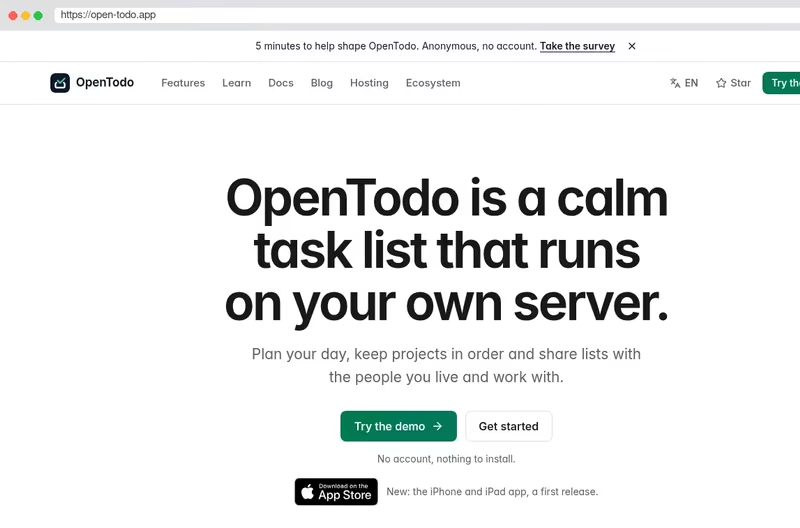
✅ Neuer Baustein in meinem Self-Hosting: Meine Aufgaben liegen jetzt in OpenTodo – auf meinem eigenen Server.

Open Source (AGPL), local-first, offline nutzbar, Sync aller Geräte über einen schlanken Container. Kein Abo, kein Lock-in, keine Daten bei Dritten.

Unterwegs greife ich per Tailscale zu – ohne offene Ports ins Internet. 🔒

Wieder ein Stück mehr Kontrolle über die eigenen Daten.

open-todo.app

Linux und Ich @linuxundich social.anoxinon.de

Last.fm verlangt ab dem 1. Dezember für jeden API-Schlüssel ein Pro-Abo. Ob euer Linux-Player danach noch scrobbelt, hängt am Entwickler. Selfhoster mit Navidrome verlieren ohne Abo Scrobbling und Metadaten wie Biografien, Cover und ähnliche Künstler.

Was ihr jetzt tun könnt, warum ListenBrainz die naheliegende Alternative ist und warum ich trotzdem nicht zahle:

linuxundich.de/lastfm-api-pro-navidrome…

LastFM Navidrome ListenBrainz Selfhosting Linux
Schräg fotografierter Bildschirm mit dem Last.fm-Supportforum: oben links das Logo, daneben die Überschrift „API keys will require Pro from 1st December“, nach rechts verschwimmt die Seite.
FediSuite @FediSuite lsbt.me

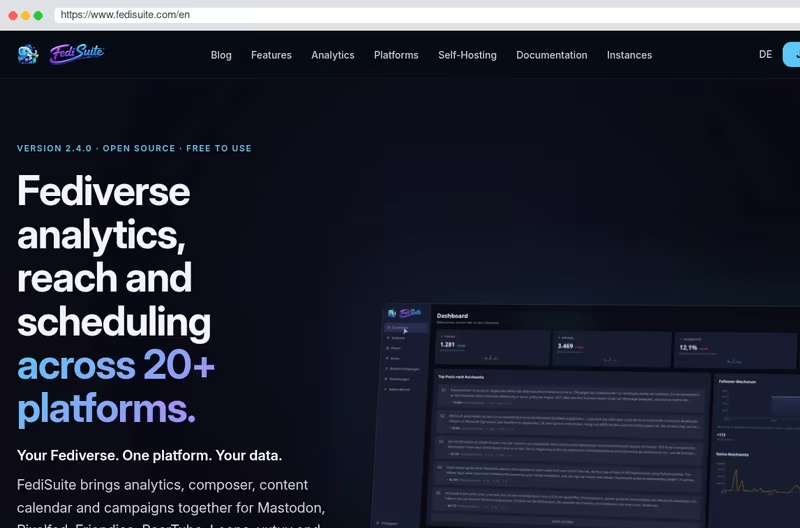
FediSuite v2.4.0 is here!

This release introduces two major features for Fediverse management:

Single Sign-On (OIDC)

FediSuite now supports OpenID Connect with identity providers such as Keycloak and authentik, enabling centralized authentication for self-hosted instances, organizations and teams.

New Statistics

Comprehensive weekly, monthly and yearly reports for individual or all connected accounts, including team accounts.

Growth, reach, interactions and publishing activityComparisons with previous periodsPermanent historical statisticsCSV, JSON and PDF exportsAccessible charts and data tablesThe release also includes numerous improvements to security, performance and usability.

FediSuite is free, open source and fully self-hostable.

fedisuite.com

FediSuite @FediSuite lsbt.me

FediSuite v2.4.0 ist da!

Das neue Release bringt zwei große Neuerungen für das Fediverse-Management:

Single Sign-On (OIDC)

FediSuite unterstützt jetzt OpenID Connect mit Identity-Providern wie Keycloak und authentik. Damit lässt sich die Anmeldung zentral verwalten – besonders interessant für selbst gehostete Instanzen, Organisationen und Teams.

Neue Statistiken

Umfassende Wochen-, Monats- und Jahresberichte über einzelne oder alle verbundenen Konten, einschließlich Teamkonten.

Wachstum, Reichweite, Interaktionen und VeröffentlichungenVergleiche mit vorherigen ZeiträumenDauerhafte historische StatistikenExport als CSV, JSON und PDFBarrierefreie Diagramme und DatentabellenDazu kommen zahlreiche Verbesserungen bei Sicherheit, Performance und Bedienbarkeit.

FediSuite ist kostenlos, Open Source und vollständig selbst hostbar.

fedisuite.com

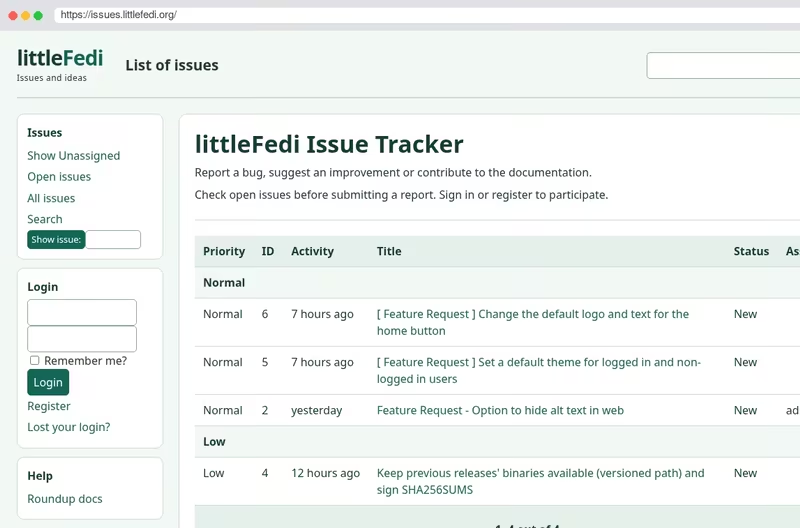
littleFedi - Official Account @littlefedi_official littleone.littlefedi.social

Another little step for #littleFedi!
As more people start testing and running littleFedi, bug reports, suggestions and ideas are becoming increasingly important. And keeping track of everything through Mastodon posts and private messages isn’t exactly the best solution. :)

So, we now have a proper Issue Tracker!

issues.littlefedi.org

Found a bug? Have an idea for a new feature? Think something could be improved, or that the documentation is missing something? This is the place.

You can register, check existing issues and open new ones.

littleFedi is still growing, and your feedback is helping us make it better, one small step at a time.

Thanks to everyone who’s been testing, reporting, suggesting and, most importantly, giving this little project a chance.

🫧 Social coding commons @smallcircles social.coop

🚨 URGENT: Self-hosters who use #NGINX reverse proxy should upgrade soonest due to multiple CVE’s that allow remote code execution.

The nginx-1.30.7 stable and nginx-1.31.9 mainline versions contain fixes for these critical vulnerabilities.

A workaround if you can’t update immediately is to disable http2, where that is on in your installation.

wiz.io/blog/…

cve.org/CVERecord?id=CVE-2026-123633

cve.org/CVERecord?id=CVE-2026-123007

news.ycombinator.com/item?id=50547374

If you run a Matrix homeserver and also use Storage Share, you might have wondered how well the two work together. There are four ways to connect the two:

Bridge Talk rooms with Matrix rooms: nextcloud.com/blog/…

Use a Matrix client inside Nextcloud: apps.nextcloud.com/apps/…

Log in to Matrix with Nextcloud as OIDC provider: docs.nextcloud.com/server/…

Share files from Nextcloud into Matrix rooms: apps.nextcloud.com/apps/…

Already using one of these?

Stefano Marinelli - littleFedi @stefano littleone.littlefedi.social

littleFedi: reverse proxy and split domains
littleFedi can use one domain for account handles and another for the server. For example:

@alice@example.com is the address people follow.
social.example.com serves the web interface, API, media and ActivityPub objects.

You can keep your existing website on example.com. It only needs a rule that redirects WebFinger requests to the littleFedi domain.

Choose both domains before creating accounts. Changing them later changes the instance’s identity.

littleFedi configuration
In littlefedi.toml, with the reverse proxy running on the same machine:

local_domain = “example.com”
web_domain = “social.example.com”

[http]
listen = “127.0.0.1:8080”
proxy_uri = “social.example.com”
trusted_proxies = [“127.0.0.1/32”]

If you already have an [http] section, edit it rather than adding another.

Point the DNS records for social.example.com at the reverse proxy. The server hosting example.com must also serve HTTPS. A DNS alias alone does not replace the WebFinger redirect.

Expose ports 80 and 443 on the proxy and keep port 8080 private. If the proxy runs on another machine, use a private listener address and trust only the proxy’s address.

Caddy
Add this to your Caddyfile, replacing the example domains:

social.example.com {

reverse_proxy 127.0.0.1:8080

}

example.com {

redir /.well-known/webfinger [social.example.com{uri}](https://social.example.com{uri}) 302

}

Caddy handles certificates and the WebSocket connections used for streaming.

If example.com already has a site block, add only the redir line to that block and keep the existing website configuration.

Check the configuration before reloading Caddy:

caddy validate –config /etc/caddy/Caddyfile

nginx
This configuration belongs in nginx’s http context, usually through an included site file. Replace the domains and certificate paths with your own.

Install valid certificates and arrange automatic renewal before enabling the HTTPS servers.

map $http_upgrade $connection_upgrade {

default upgrade;
'' close;

}

server {

listen 80;
listen [::]:80;
server_name example.com social.example.com;
return 308 [$host$request_uri](https://$host$request_uri);

}

server {

listen 443 ssl;
listen [::]:443 ssl;
server_name social.example.com;

ssl_certificate /etc/letsencrypt/live/social.example.com/fullchain.pem;
ssl_certificate_key /etc/letsencrypt/live/social.example.com/privkey.pem;
client_max_body_size 41m;

location / {
    proxy_pass [127.0.0.1:8080](http://127.0.0.1:8080);
    proxy_http_version 1.1;
    proxy_set_header Host $host;
    proxy_set_header X-Forwarded-Host $host;
    proxy_set_header X-Forwarded-Proto $scheme;
    proxy_set_header X-Forwarded-For $remote_addr;
    proxy_set_header Upgrade $http_upgrade;
    proxy_set_header Connection $connection_upgrade;
    proxy_read_timeout 1h;
    proxy_buffering off;
}

}

server {

listen 443 ssl;
listen [::]:443 ssl;
server_name example.com;

ssl_certificate /etc/letsencrypt/live/example.com/fullchain.pem;
ssl_certificate_key /etc/letsencrypt/live/example.com/privkey.pem;

location = /.well-known/webfinger {
    return 302 [social.example.com$request_uri](https://social.example.com$request_uri);
}

location / {
    return 404;
}

}

If example.com already hosts a website, add only the WebFinger location to its existing HTTPS server block. Keep the website’s other rules instead of the return 404 shown above. If you already have the same map directive, do not add it twice.

Check the configuration before reloading nginx:

nginx -t

Check discovery
Use an existing local account, replacing alice with its username:

curl –fail -i ‘example.com/.well-known/…

The response should redirect to social.example.com, keeping the resource query parameter.

Then follow the redirect:

curl –fail -L ‘example.com/.well-known/…

The JSON should contain acct: as its subject, with an ActivityPub actor link at social.example.com/users/….

Finally, check a follow in both directions with another instance.

If account handles and the server use the same domain, only the reverse proxy is needed.

littleFedi SelfHosting ReverseProxy nginx caddy
Rev Mike @RevMike social.tchncs.de

Hello Mastodon! 👋

Thought I’d introduce myself!

I’m Mike, living in North Yorkshire, UK. By day I’m a Church of England vicar, but this account is mostly for indulging my geeky side!

I’m a Linux enthusiast, running an OMV home server with Docker, Nextcloud, Home Assistant, Immich and various other bits and pieces. I’ve recently moved to a Jolla phone running Sailfish OS, and I’m enjoying exploring life beyond Android and Google.

I’m interested in open source, self-hosting, privacy and digital independence. I enjoy tinkering, learning new things and occasionally breaking stuff before figuring out how to fix it!

Introduction Introductions Linux SelfHosting OpenSource
+8 Less SailfishOS Jolla OpenMediaVault Docker HomeAssistant Nextcloud DeGoogle Fediverse

Keyboard shortcuts

Navigation

Home g h
Feed g f
Messages g m
Notifications g n
Your profile g p
Search /

Actions

Write a new post n
Send the post or message you are writing ⌘/Ctrl ↵
Next post in the feed j
Previous post in the feed k

General

Show this help ?
Close menus and dialogs Esc

The single-key shortcuts pause while you type, and are off on phones and tablets.