cyber security

Tags 3 followers

Follow from the Fediverse

Follow #cyber_security from Mastodon or any other Fediverse app and its public posts arrive in your timeline. No vutuv account needed.

@cyber_security@tags.vutuv.de

Your address is used once, to send you to your own server's follow dialog. It is never stored here.

Also known as

cybersecurity

The most endorsed users with this tag

Posts with this tag

106 posts

Filters
QARC @qarc mastodon.social

👏 Great to see Alicja Kario presenting her research on side-channel attacks against modern post-quantum algorithms at the OpenSSL Conference!

Proud to see research supported by the EU-funded QARC project being shared with the cryptography community. 🔐

PostQuantumCryptography Cybersecurity QuantumResilience RedHat ECCC HorizonEurope
A promotional image featuring a photograph of a woman with dark hair and glasses presenting on stage at the OpenSSL Conference. She stands beside a lectern bearing the "OpenSSL CONFERENCE" logo, next to a large projection screen displaying a title slide for "QARC - Joint Post-Quantum Initiative" with logos for "Funded by the European Union," the ECCC, and project partners. Across the lower section of the graphic, a blue text overlay reads: "Advancing post-quantum cybersecurity research / QARC at the OpenSSL Conference," accompanied by the white QARC logo in the bottom right corner.
Svea Eckert @sveckert mastodon.social

Erst Supermärkte, jetzt eine Blutbank. Warum Angreifer so leicht an Kühlanlagen rankommen, erkläre ich hier (in sehr, sehr kurz). Mehr zum Fall und auch zu dem, was man über die möglichen Täter weiß, dann nächste Woche im Podcast They Talk Tech mit @evawolfangel@chaos.social

Cybersecurity Kühlanlagen Hackerangriff
Svea erklärt den Kühlhack, Fotos von Steuerungen werden eingeblendet
Harry Sintonen @harrysintonen infosec.exchange

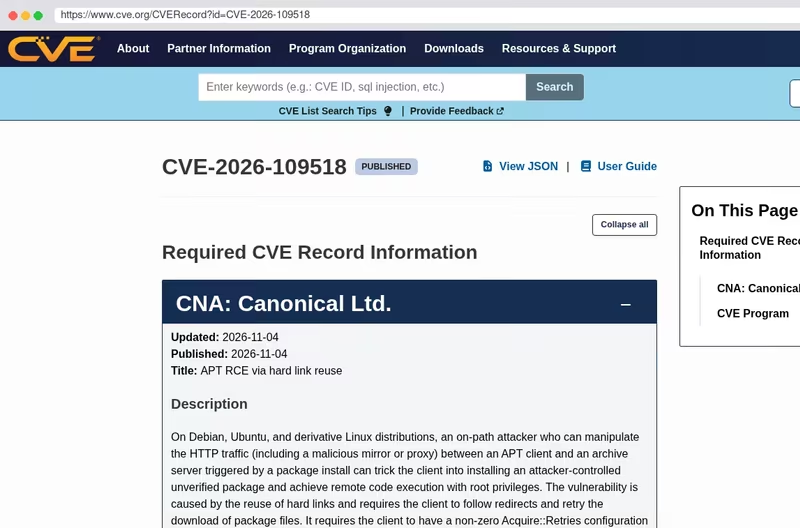
The #Debian APT security update fixes “Download verification bypass” CVE-2026-109518:

“On Debian, Ubuntu, and derivative Linux distributions, an on-path attacker who can manipulate the HTTP traffic (including a malicious mirror or proxy) between an APT client and an archive server triggered by a package install can trick the client into installing an attacker-controlled unverified package and achieve remote code execution with root privileges. The vulnerability is caused by the reuse of hard links and requires the client to follow redirects and retry the download of package files. It requires the client to have a non-zero Acquire::Retries configuration setting; the value 3 is the default starting with Debian 12 (bookworm) and Ubuntu 22.04 LTS (Jammy Jellyfish), so older releases are unaffected in a default configuration”

cve.org/CVERecord?id=CVE-2026-109518

Obviously any Debian based distribution using APT can be affected as well and should install updates as soon as they become available.

The vulnerability description doesn’t mention this explicitly but if your system doesn’t have Emudhra certificates purged, they can be vulnerable even when using HTTPS sources.

Radio ORANGE 94.0 @radioorange940 wien.rocks

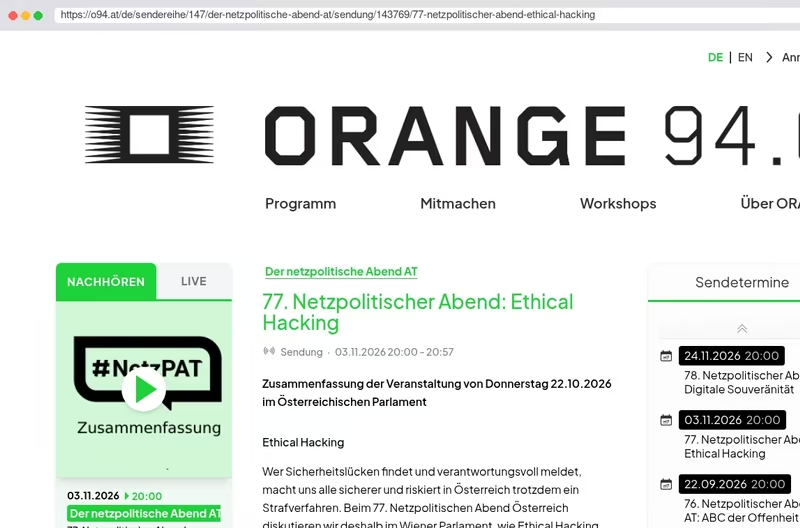
Wer Sicherheitslücken findet und verantwortungsvoll meldet, macht uns alle sicherer und riskiert in Österreich trotzdem ein Strafverfahren. Der 77. Netzpolitischen Abend Österreich diskutierte im Wiener Parlament, wie Ethical Hacking rechtlich besser abgesichert werden kann.

Der netzpolitische Abend AT: Ethical Hacking
03.11. 20:00-20:57

o94.at/de/…

Netzpolitik Hacking EthicalHacking hacktivismus fediverse
+4 Less itsicherheit cybersecurity Wien FreiesRadio
Tino Eberl @tinoeberl mastodon.online

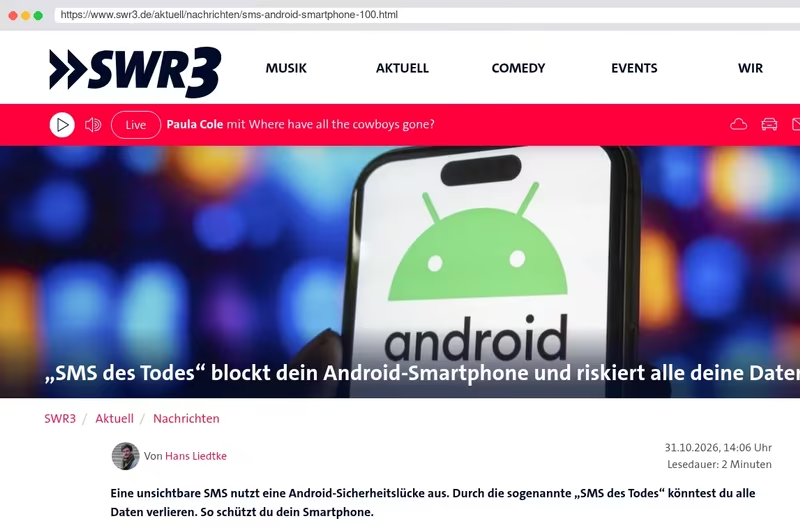
Eine neu entdeckte #Sicherheitslücke bedroht #Android Smartphones der Versionen 12 bis 17.

Eine unsichtbare, manipulierte #SMS kann Geräte in eine Neustartschleife versetzen. Im schlimmsten Fall droht #Datenverlust durch einen notwendigen Werksreset. Für Android 14 bis 17 stellt #Google Sicherheitsupdates bereit. Ältere Versionen erhalten voraussichtlich keine entsprechenden Korrekturen mehr.

swr3.de/aktuell/…

Cybersecurity Datensicherheit Smartphone

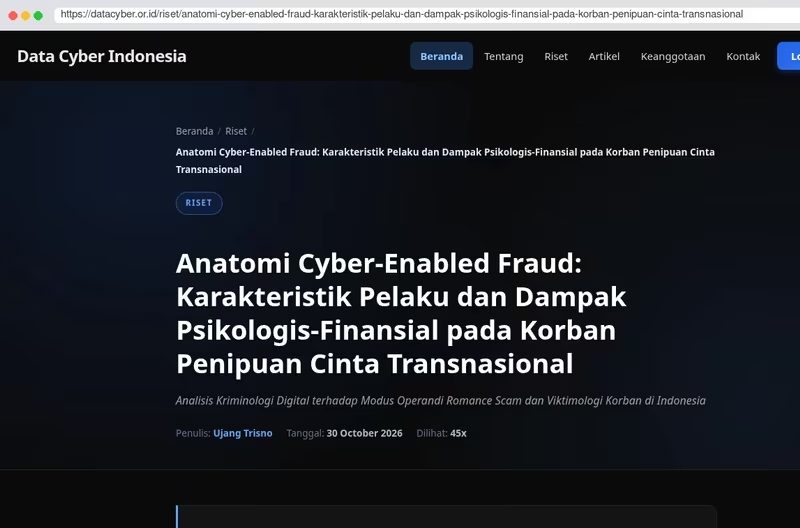
Anatomi Cyber-Enabled Fraud: Karakteristik Pelaku dan Dampak Psikologis-Finansial pada Korban Penipuan Cinta Transnasional

datacyber.or.id/riset/…

data science cyber security research

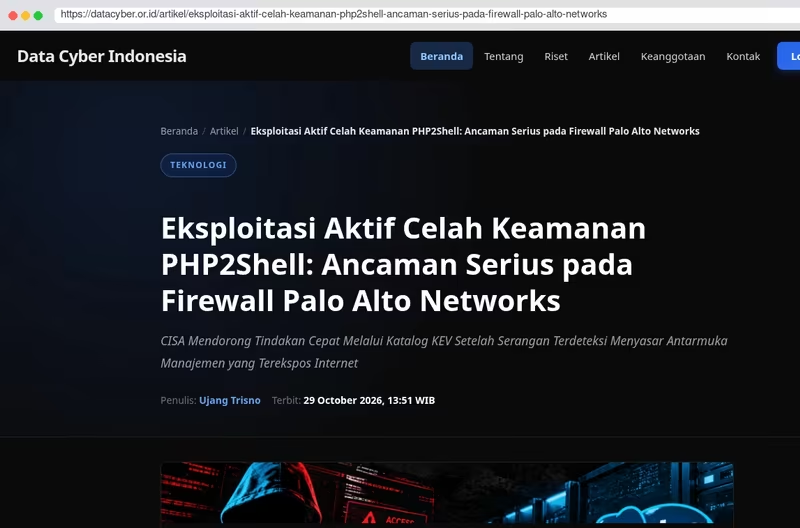
Eksploitasi Aktif Celah Keamanan PHP2Shell: Ancaman Serius pada Firewall Palo Alto Networks

datacyber.or.id/artikel/…

cyber security Article

Aksi Warp Panda: Eksploitasi Celah Zero-Day VMware ESX untuk Menghapus Jejak Audit

datacyber.or.id/artikel/…

cyber security Article

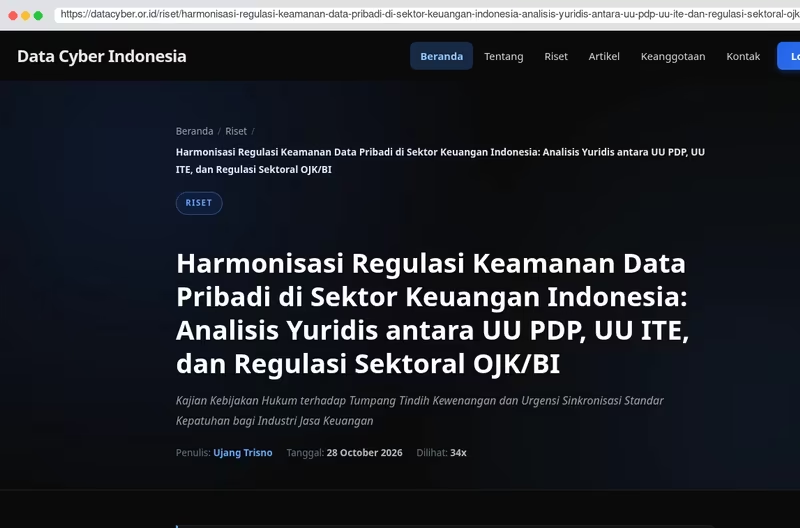
Harmonisasi Regulasi Keamanan Data Pribadi di Sektor Keuangan Indonesia: Analisis Yuridis antara UU PDP, UU ITE, dan Regulasi Sektoral OJK/BI

datacyber.or.id/riset/…

cyber security research Data Cyber Indonesia

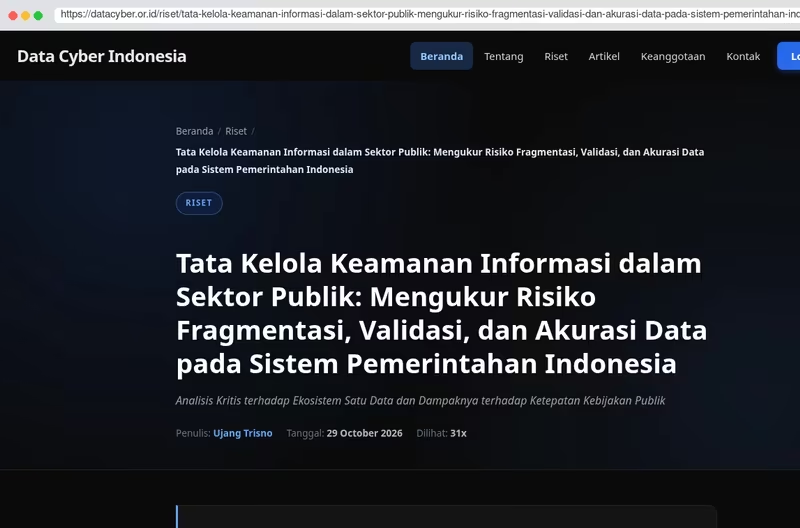
Tata Kelola Keamanan Informasi dalam Sektor Publik: Mengukur Risiko Fragmentasi, Validasi, dan Akurasi Data pada Sistem Pemerintahan Indonesia

datacyber.or.id/riset/…

research cyber security

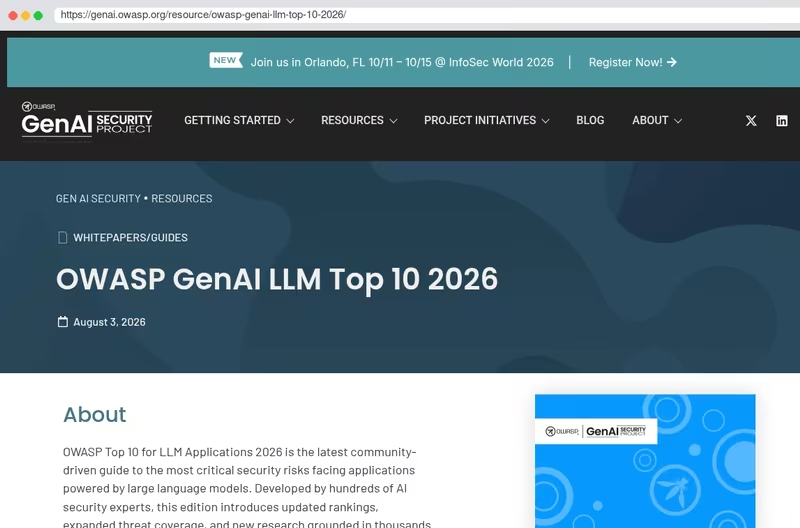
Bei der Liste der häufigsten Sicherheitslücken OWASP für LLM-Anwendungen 2026 gibt es eine interessante Umkehrung.

Kurz zur Einordnung: #OWASP ist ein offenes Sicherheits-Netzwerk, dessen Listen die relevantesten Software-Risiken definieren. Die #LLM-Liste ist die Standardreferenz für Risiken in Anwendungen mit Sprachmodellen - von Chatbots bis zu KI-Agenten.

Fachleute stufen KI-Fehlinformation fast als unwichtig ein. Der Datensatz aus über 7.700 echten Vorfällen stuft es hingegen weit nach oben. Die größte Lücke zwischen Wahrnehmung und Wirklichkeit in der gesamten Liste, in einer schmerzhaften Richtung.

Warum ist das so? Ein KI-Modell formuliert flüssig und selbstbewusst. Wenn dieser Output eine Entscheidung oder einen Werkzeug-Aufruf beeinflusst, führt eine falsche Antwort zu einer falschen Handlung. Der Fehler landet anscheinend öfter als angenommen.

Für Führungskräfte heißt das: Das Risiko von KI-Fehlern liegt nicht im Text, sondern in dem, was Unternehmen mit dem Text anfangen. Ein nicht integriertes Modell nervt höchstens. Ein Modell jedoch, dessen Output ungeprüft in Prozesse fließt, trifft Entscheidungen.

Genau deshalb steht KI-Fehlinformation jetzt mittendrin auf der Liste statt unten.

genai.owasp.org/resource/…

#KI #Cybersecurity #Leadership

1
From other networks 2

1 reply 1 repost

@0xA1E8@infosec.exchange shared this

Already counted in the numbers above.

NKCS | NCC-DE @nkcs social.bund.de

Von der Cybersecurity-Idee zum geförderten Projekt – welche Förderung passt zu eurem Vorhaben?🤔

Auf der NKCS Fachkonferenz 2026 widmen wir einen Teil des Programms ganz den unterschiedlichen Förderwegen für innovative #Cybersecurity-Vorhaben.
Daneben gibt es auch die Gelegenheit, mit Experten zu sprechen, Projektideen weiterzudenken und mögliche Partner aus Wirtschaft und Forschung kennenzulernen.

📅 17.11.26
📍 Köln
✅ Teilnahme kostenfrei

Weitere Infos und Anmeldung: nkcs.bund.de/de/…

NKCS Fachkonferenz
Brian Greenberg @brian_greenberg infosec.exchange

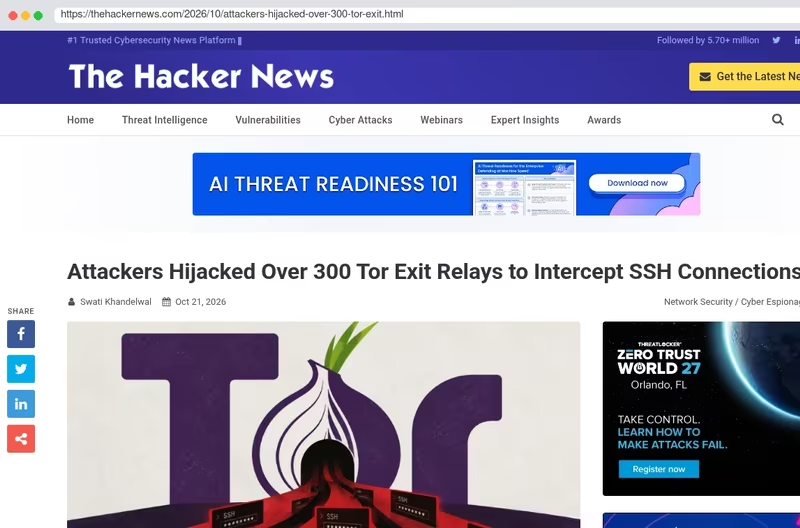
🔐 The offline master keys were not offline. Zimmer, who ran the largest group of hijacked Tor relays, said so in his post-mortem. Copies sat in a backup on his management server, encrypted with a password the attacker already found. 😬

He was just as blunt about the cause: The root cause was ours: one password reused for SSH login, sudo, and the backup passphrase, stored in plaintext on both servers, plus SSH password authentication left enabled on the internet-facing management server. Credit to him for putting that in writing. 👏 I’d guess plenty of servers out there would earn the same sentence, maybe a few of yours.

In early October, attackers took over more than 300 Tor exit relays and rerouted SSH connections to 12 interception servers. At the peak on October 4, those relays carried 7.46% of Tor’s exit capacity, according to an analysis of public directory data. Zimmer’s own break-in came earlier. On August 28, the attacker logged into his management server with the account password on the first try and gained root within five minutes.

The victims got hit through passwords too. To get burned, you had to accept the interceptor’s host key and type a password. Some people saw an OpenSSH warning that the server had changed… others just got the usual prompt to accept a new key. If you used key-based login, the attacker couldn’t pass it through to the real server because the signature is tied to that session.

The backdoor is Ebury version 1.8.3, a single library file that leaves the packaged library alone, so the normal package checks come back clean. Zimmer’s servers showed none of the host-level signs on the Tor Projects checklist. The only thing that gave it away was the changed exit policy.

🚨 If you run anything with SSH open to the internet, turn off password login and use keys. If you accepted an unfamiliar or changed host key over Tor between October 1 and 5, assume that password is stolen, change it, and check the server. And if you’re poking around a box you suspect, log in with a key, since Ebury captures typed passwords.

Nobody knows yet how the other 58 operators got hit. On FranTech, the network behind BuyVM, 71 of 101 relays switched to the attackers’ policy, compared with 13 of 9,054 hosted elsewhere. The researcher who spotted this asked whether the attackers got in at the hosting provider level, and so far nobody has answered.

thehackernews.com/2026/…

hackmac @hackmac mastodon.social

Cyberangriff auf die Martin-Luther-Universität Halle-Wittenberg: Laut Universität haben Unbefugte voraussichtlich auf rund 51.000 Studienbewerbungen zugegriffen (SoSe 2026 und WiSe 2026/27). Abgerufen wurden u. a. Namen, Anschriften, Kontaktdaten, Geburtsdatum und -ort. Strafanzeige ist erstattet.

Wer sich beworben hat: Vorsicht bei Mails zur Bewerbung, denn echte Daten machen Phishing glaubwürdig.

Keyboard shortcuts

Navigation

Home g h
Feed g f
Messages g m
Notifications g n
Your profile g p
Search /

Actions

Write a new post n
Send the post or message you are writing ⌘/Ctrl ↵
Next post in the feed j
Previous post in the feed k

General

Show this help ?
Close menus and dialogs Esc

The single-key shortcuts pause while you type, and are off on phones and tablets.