Posts by Stefan Wintermeyer · 542 posts

All Own posts Reposts Replies

Diese Woche habe ich gelesen wie ein Entwickler geschrieben hat, das er vor 30 Jahren aufgehört hat Assembler Code zu lesen und einfach dem Compiler vertraut hat. Heute macht er das gleiche mit Source Code und Agents. Es liest sich den Source Code nicht mehr durch. Er arbeitet nur noch mit dem Agenten.

Ich finde den Vergleich sehr treffend.

1
From other networks 3

Replying to @wintermeyer

ssh ist ein schöner Vertreter von all den “taken for granted” Produkten. Ist aber auch ne tolle Sache 😄

Ich finde für die Unterstützung beim AI assisted coding mittlerweile backlog.md (oder genauer gesagt: meinen fork davon) großartig. Und benutze es extensiv. Das ginge sicher auch mit Github und Co, aber es ist gefühlt lower friction und offline-fähig.

1

backlog.md

Kannst Du etwas mehr dazu schreiben? Hier als Antwort oder als eigenen Post? Das Thema interessiert mich brennend.

1

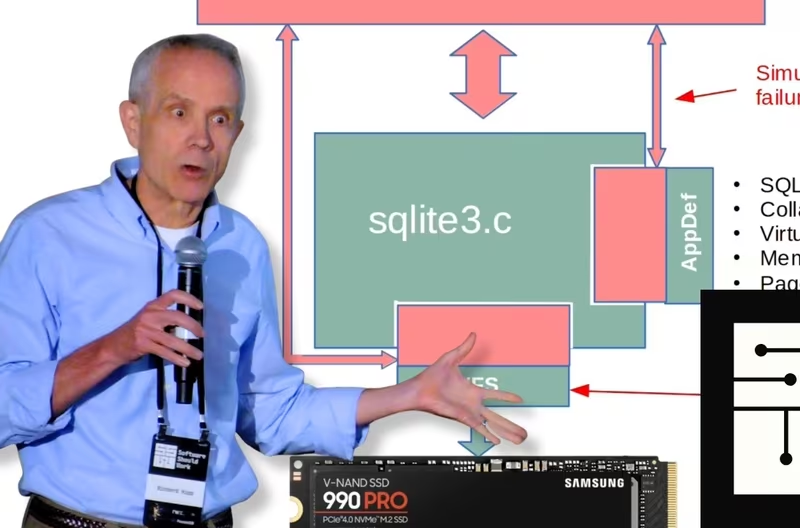
Interesting talk by the inventor of SQLite.

youtube.com/watch?v=V_qzqY1bb7I

sqlite YouTube
sqlite YouTube
From other networks 1

Rover — Interactive maps for Phoenix LiveView

Rover is a Phoenix LiveView component for interactive maps. It wraps OpenLayers — a serious GIS engine with projections, WMS/WMTS, vector layers, cadastral data, etc. — and removes the ceremony most Phoenix applications don’t need.

What it does

<.map
  id="parcels"
  center={{45.75, 4.85}}
  zoom={12}
  markers={@clients}
  shapes={@parcels}
  tiles={:ign_ortho}
/>

Assign a list of maps, get a map.

Change the list, and Rover diffs by ID and updates only what changed — no flicker, no interrupted pan, no popups unexpectedly closing and reopening.

Markers: any struct with :id, :lat, and :lon. Optional emoji, custom colors, draggable pins, and popups (HEEx slots, escaped by default).

Shapes: GeoJSON from ST_AsGeoJSON or your own data. Shapes are diffed by revision rather than hashing, so updating thousands of points stays efficient.

Clustering for hundreds of markers.
Heatmaps for density analysis.
Popups on shapes that point to the geometry rather than its centroid.
View control without losing declarative framing with Rover.fly_to/4 and Rover.fit_to/4.

Rover also has built-in support for IGN Géoportail, including French cadastral maps and aerial orthophotography.

Why not just write a hook?

You can — and the first version is short.

Then you fix reconciliation, coordinate order, viewport framing, attribution, element ID changes, flickering, and all the little edge cases that appear once the map becomes part of a real application.

That’s the layer Rover is trying to provide.

OpenLayers itself is the bet underneath it.

Three pins on a tile layer is an afternoon’s work. The next morning you need WMS layers, a cadastral overlay, vector data, clustering, or another projection — and suddenly the ceiling has moved somewhere else.

OpenLayers can handle that. Rover tries to make it feel natural from Phoenix LiveView.

Try it

Livebook demo

Run Rover in Livebook

Documentation

Rover v0.3.0 — HexDocs

Source

GitHub — nseaSeb/rover

Rover is open source and still evolving. Feedback, ideas, and criticism are welcome.

1

Rover — Interactive maps for Phoenix LiveView

Rover is a Phoenix LiveView component for interactive maps. It wraps OpenLayers — a serious GIS engine with projections, WMS/WMTS, vector layers, cadastral data, etc. — and removes the ceremony most Phoenix applications don’t need.

What it does

<.map
  id="parcels"
  center={{45.75, 4.85}}
  zoom={12}
  markers={@clients}
  shapes={@parcels}
  tiles={:ign_ortho}
/>

Assign a list of maps, get a map.

Change the list, and Rover diffs by ID and updates only what changed — no flicker, no interrupted pan, no popups unexpectedly closing and reopening.

Markers: any struct with :id, :lat, and :lon. Optional emoji, custom colors, draggable pins, and popups (HEEx slots, escaped by default).

Shapes: GeoJSON from ST_AsGeoJSON or your own data. Shapes are diffed by revision rather than hashing, so updating thousands of points stays efficient.

Clustering for hundreds of markers.
Heatmaps for density analysis.
Popups on shapes that point to the geometry rather than its centroid.
View control without losing declarative framing with Rover.fly_to/4 and Rover.fit_to/4.

Rover also has built-in support for IGN Géoportail, including French cadastral maps and aerial orthophotography.

Why not just write a hook?

You can — and the first version is short.

Then you fix reconciliation, coordinate order, viewport framing, attribution, element ID changes, flickering, and all the little edge cases that appear once the map becomes part of a real application.

That’s the layer Rover is trying to provide.

OpenLayers itself is the bet underneath it.

Three pins on a tile layer is an afternoon’s work. The next morning you need WMS layers, a cadastral overlay, vector data, clustering, or another projection — and suddenly the ceiling has moved somewhere else.

OpenLayers can handle that. Rover tries to make it feel natural from Phoenix LiveView.

Try it

Livebook demo

Run Rover in Livebook

Documentation

Rover v0.3.0 — HexDocs

Source

GitHub — nseaSeb/rover

Rover is open source and still evolving. Feedback, ideas, and criticism are welcome.

1

Hello vutuv, hello World!

1

Hello Hugo! Good to have you onboard!

Reposted by Stefan Wintermeyer

Christin Löhner @christin bizzfed.de

An deiner Webseite fehlt die Klingel
Gestern Abend habe ich meine eigene Seite aufgerufen und eine Fehlerseite bekommen: keine security.txt. Bei 98 von hundert deutschen Webseiten fehlt diese Klingel, also die Datei, die sagt, an wen man sich wendet, wenn man eine Sicherheitslücke gefunden hat. Zehn Minuten Arbeit. Reden wir drüber!

chrislo.de/blog/…

chrislo ITSicherheit DigitaleUnabhängigkeit securitytxt BSI
+6 Less RFC9116 Schwachstellenmeldung Vereine WordPress Hackerparagraf CyberResilienceAct

Was sollte man sich in Brüssel anschauen? Was sollte man machen? Ich habe einen Tag Zeit. Wochenende.

Von der Schokolade, den ach so tollen Waffeln und den Pommes war ich beim letzten Besuch nicht so richtig begeistert.

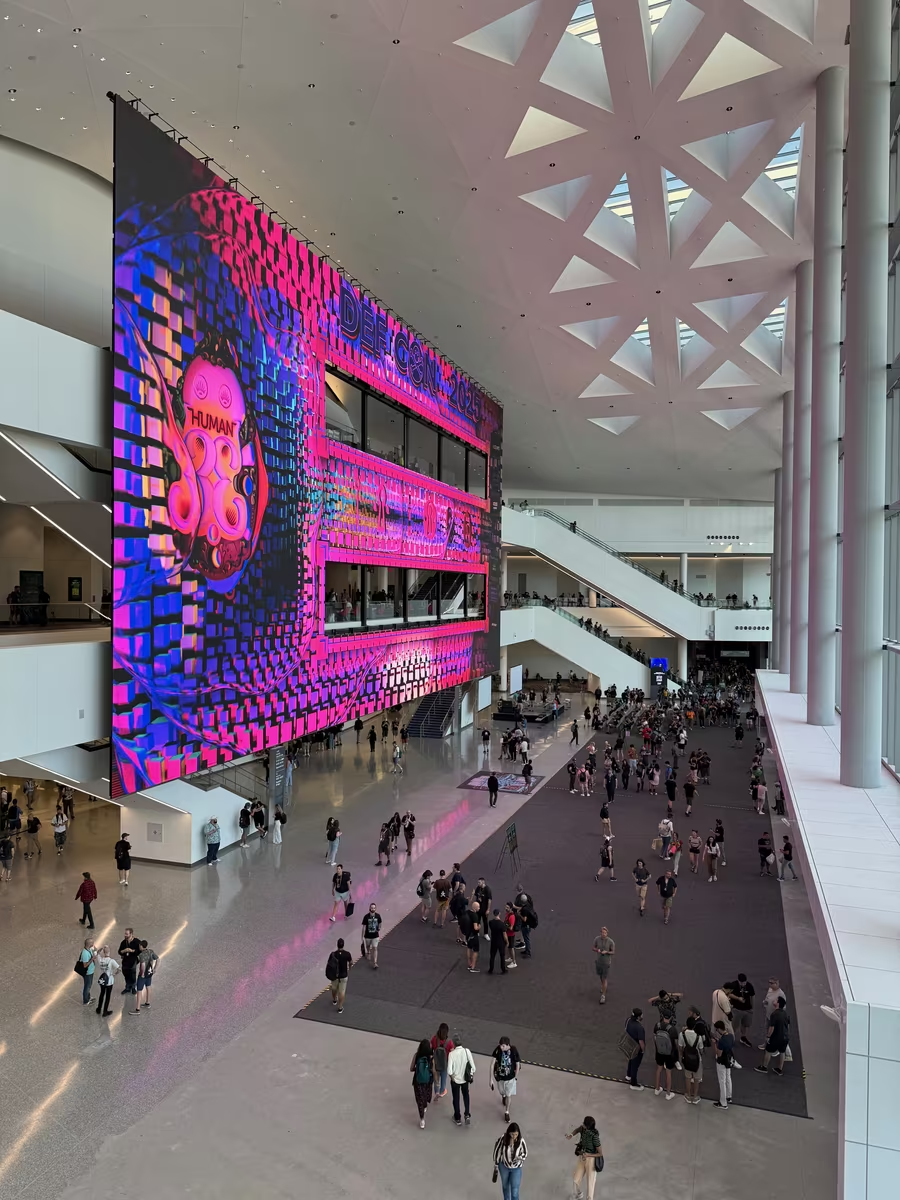
Gerade ist die DEF CON 34 in Las Vegas. Letztes Jahr war ich zum ersten mal da. Donnerstag hin und Sonntag zurück geflogen. Mal abgesehen von den über 40 Grad im Schatten war es eine krasse Erfahrung. Die Konferenz ist groß! Ich war hauptsächlich wegen dem Social Engineering Village da und habe mich um 06:00 Uhr morgens angestellt, um eins der begrenzten Tickets für die Vishing Competition zu bekommen. Ich habe dazu einen Artikel in der iX geschrieben. Wer einmal die Möglichkeit hat, sich das anzuschauen, sollte es auf jeden Fall machen. Es gibt davon halt keine Aufzeichnungen, weil das illegal wäre. Nur die, die im Raum sind, können live mitverfolgen wie Menschen angerufen werden und dann dazu gebracht werden geheime Informationen auszuplaudern oder gar auf bestimmte Webseiten zu gehen. Social Engineering ist ein extrem mächtiges Werkzeug.

5.900! 🎉 @joshua_marx from South Africa.

Welcome Joshua! Good to have you onboard.

Reposted by Stefan Wintermeyer

MIT Technology Review DE @techreview_de social.heise.de

Als besonders gefährliche Variante von Data Poisoning wird von Fachleuten und in der Literatur die gezielte Vergiftung von Trainingsdaten für KI-Modelle diskutiert. Das kann KI-Modelle nicht nur dazu bringen, Fragen der Anwendenden falsch oder einseitig zu beantworten, sondern auch gefährlichere Aktionen auszuführen – etwa das Nachladen von weiterem Schadcode. (+)

#KI #DataPoisoning #Coding #Malware

t3n.de/news/…

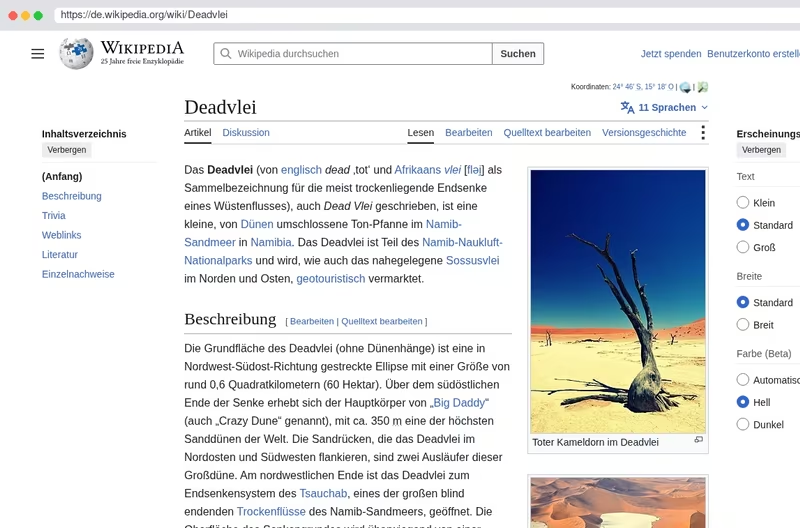
Ich muss in zwei Wochen beruflich nach Namibia. Alles eher kurzfristig. Die Planung erfolgt zwischen Tür und Angel. Heute morgen sass ich im Auto und sagte Siri: “Starte ChatGPT” und dann “Ich komme am xx. August morgens in Windhoek an und möchte mir Deadvlei anschauen. Wie realistisch ist das? Ich habe nicht viel Zeit. Was brauche ich dafür?”

Während ich im Stau stand hat ChatGPT mir eine Route vorgeschlagen. Infos zum Wetter rausgesucht (es wird abends und nachts kalt) und mir auch gesagt, das ich die Drohne zu Hause lassen kann (man darf im Nationalpark keine Drohnen fliegen). Dann haben wir noch über Malaria gesprochen (unproblematisch im Süden von Windhoek) und ein paar Campsites und Hotels verglichen. ChatGPT konnte mir sagen, das die Verfügbarkeit ein Problem ist.

Es war ein hin und her. Es war nicht perfekt. Aber das ist Jammern auf extrem hohem Niveau. Es war schon SEHR krass. Noch vor 2-3 Jahren absolut Science Fiction.

Agent ChatGPT AI
Agent ChatGPT AI

Mal losgelöst von vutuv.

Was sind Eure drei Lieblings-Open-Source-Projekte oder die Open-Source-Porjekte, die Ihr am meisten nutzt? Wenn Ihr das noch kurz begründen könntet, wäre ich dankbar.

Ich frage aus reiner Neugierde.

  1. Taskwarrior – meine Aufgabenverwaltung, ohne die hätte ich den Kopf viel zu voll und müsste mich an zu viele Dinge erinnern.
  2. Logseq – mein zweites Gehirn, das ich brauche, um mal kurz etwas zu notieren.
  3. Vaultwarden – hier finden sich alle meine Passwörter und Passkeys (selbst gehostet).

Und jetzt Ihr.

5

Die ich am meisten benutze? Heute? hmmm…

Und ohne Debian auf dem Server könnte ich den Laden dicht machen. Auf der anderen Seite schreibe ich diese Zeilen auf meinem MacBook Air. Linux würde auch als Arbeitsgerät gehen, aber die Kombi iPhone und MacBook Air ist schon sehr charmant.

2

Replying to @dirk

Hat zumindest einen Nutzer direkt hierhergeführt. :-)

1

Willkommen Mark! Schön das Du hier bist.

So, schauen wir einmal, ich habe mal etwas Werbung auf LinkedIn gemacht.

linkedin.com/posts/…

2

Danke Dirk! Das hilft sehr.

PS: Ich frage mich ja, warum LinkedIn die URLs immer verkürzt?
PPS: Ich muss linkedin.com wohl in die Blacklist für Screenshots aufnehmen

3

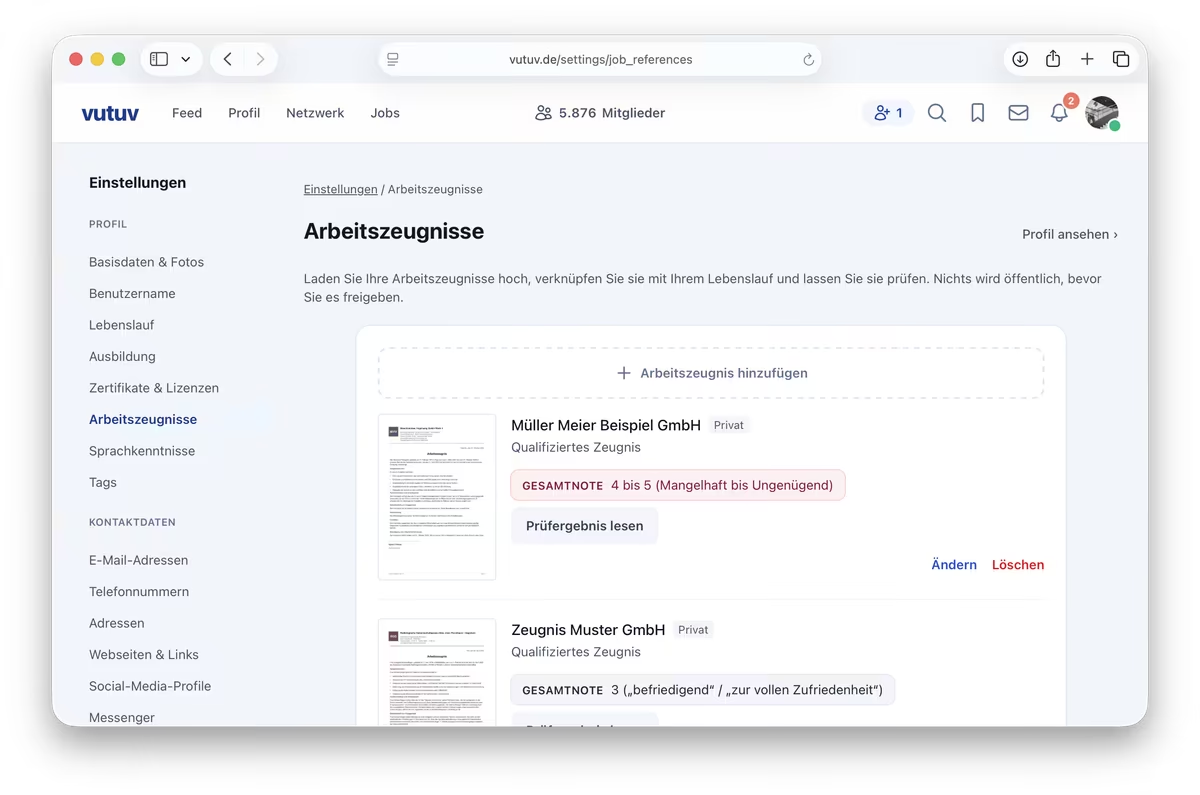
Neues vutuv Feature: Arbeitszeugnisse verwalten

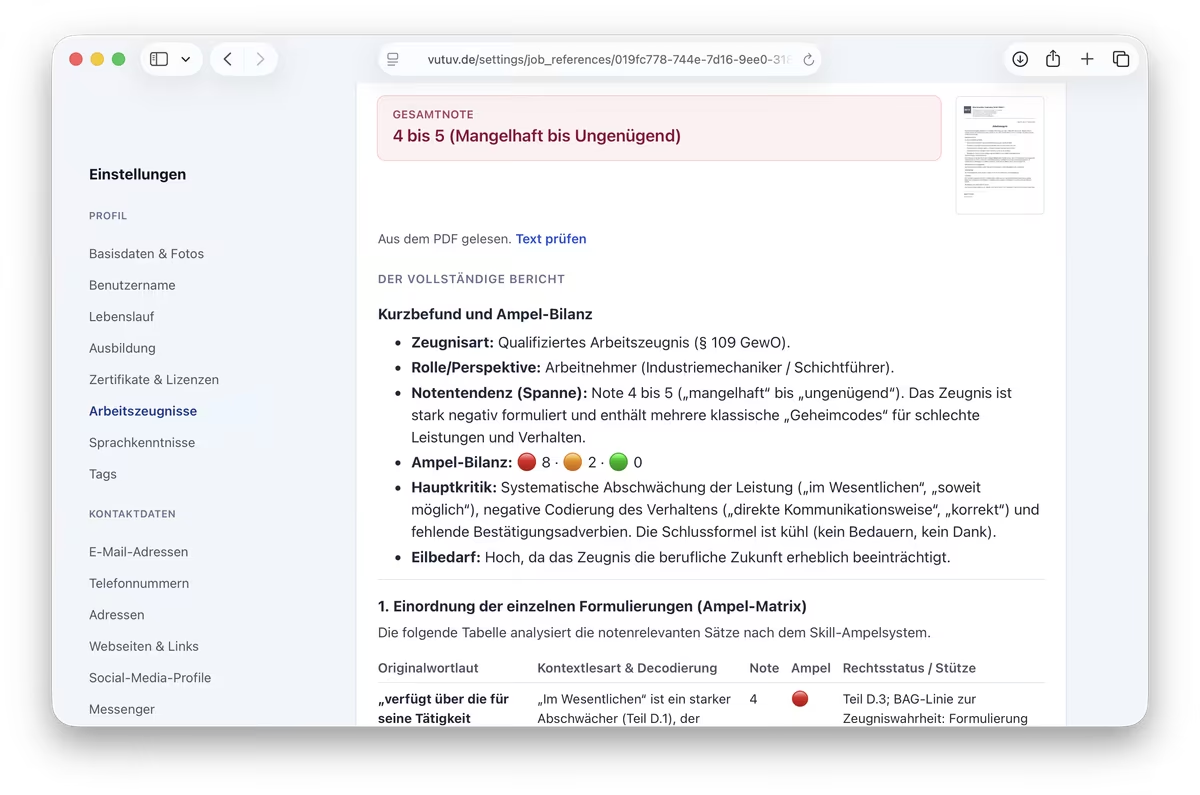
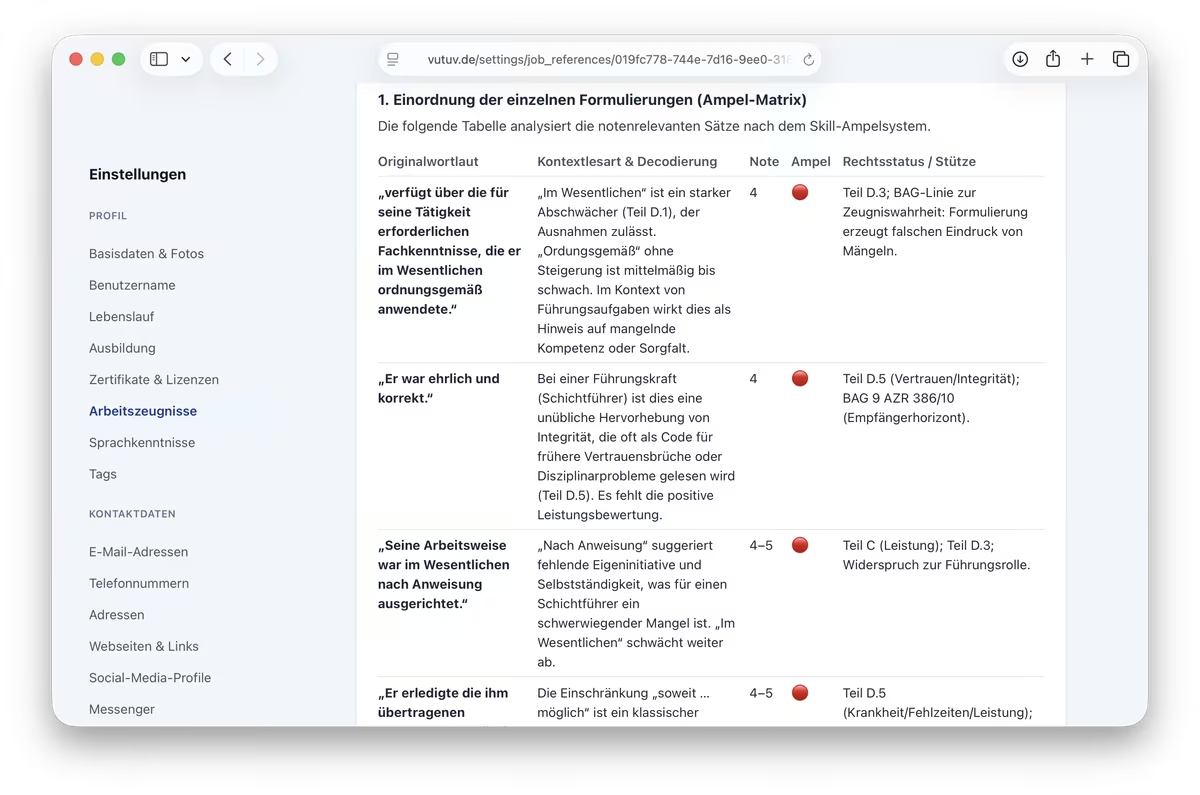
Alle Arbeitszeugnisse kann man mit Einträgen im Lebenslauf verlinken. Das ist ja schon ganz nett, aber das Powerfeature ist, das Deutsche Arbeitszeugnisse automatisch überprüft werden können. Also ob sie fair sind und was für eine Note es eigentlich ist. Und das auf unserer Hardware und nicht in der Cloud. Das Feature ist unter vutuv.de/settings/job_references erreichbar. Wir benutzen den Arbeitszeugnis-Prüfer Skill von Tom Braegelmann.

PS: Wenn ihr gerade kein Arbeitszeugnis zur Hand habt, aber das Feature mal ausprobieren wollt. Auf github.com/Klotzkette/arbeitszeugnispru… sind Beispiel Zeugnisse. Die kann man dafür benutzen.

2

Ich arbeite an einem neuen Feature. Kann mir jemand Arbeitszeugnisse mailen? Gute und schlechte. PDF wäre perfekt. JPEG oder so geht aber auch. Selbst der reine Text ist ok. Anonymisiert oder nicht. Ich brauche nur Beispiele zur Entwicklung und zum Testen. Idealerweise per E-Mail an sw@wintermeyer-consulting.de

Danke!

From other networks 1

1 like

@rene@bizzfed.de liked this

Already counted in the numbers above.

Replying to @wintermeyer

Danke. 😊

Ich bin von der LinkedIn-Import-Funktion beeindruckt und ganz begeistert. Das hat super funktioniert.

Auch das man sich den Lebenslauf hier exportieren kann, finde ich super.

1

Danke für Dein Feedback! Das geht natürlich runter wie Öl.

Eine Beauty-Influencerin, die nach einer “unzureichenden Werbelabels” Strafe Insolvenz anmeldet. Das ist doch mal ein klassischer Fall von Lemonade out of Lemons! Die hat mit der Insolvenz alleine schon so viel Sichtbarkeit erzeugt, das sich alles gelohnt hat. heise.de/news/…